

Thinking about buy to let you already own or one you’re about to buy? Discuss with BM14 Finance and we’ll help you work out what cover actually makes sense for your situation.
________________________________________________________________________________________________________________________
If you’re renting out a property in the UK, London or Hempstead, Kent, buy to let insurance is one of those things that’s easy to put off, right up until a pipe bursts at 2 am or a tenant slips on a loose step. Most landlords sort out the mortgage, work out the rental yield, and think about tenants long before they think about insurance. That’s usually a mistake.
Buy to let insurance isn’t the same as the home insurance you’d take out on a house you live in yourself. It’s built around a different set of risks, tenants, liability, rent that suddenly stops coming in, and getting it wrong can leave you exposed at exactly the moment you can least afford it.
This guide walks through what buy to let insurance actually covers, how it compares to standard home insurance, what it costs in the UK (London or Hempstead, Kent) right now, and the mistakes that catch landlords out most often.
What Is Buy to Let Insurance?

Buy to let insurance also called landlord insurance, is a policy designed specifically for people who rent out property rather than live in it themselves. It’s designed around the reality of having tenants: damage that isn’t your fault, income that can stop overnight, and legal exposure that a normal homeowner never has to think about.
Here’s the part that trips a lot of first-time landlords up: once you start renting out a property, your regular home insurance usually stops being valid. Most standard policies are written specifically for owner-occupied homes, and letting the property out, even to a family member, can void the cover without you realising it.
Insurance is usually just one piece of a much longer process too. If you’re still buying the property, it helps to see where insurance actually fits in, our “UK Mortgage Application Process: A Complete Step-by-Step Guide walks through each stage so it’s not something you’re scrambling to sort out at the last minute.
Buy to Let Insurance vs Standard Home Insurance
On paper, these can look similar. In practice, they’re created for two completely different situations.
| Standard Home Insurance | Buy to Let Insurance | |
| Who it’s for | People living in the property | Landlords renting the property out |
| Valid once tenanted? | Usually not | Yes, built for it |
| Tenant damage | Not covered | Often covered or available as an add-on |
| Loss of rental income | Not covered | Can be included |
| Liability for tenants/visitors | Limited or excluded | Core part of the policy |
| Unoccupied property between tenants | Often restricted after 30-60 days | Usually more flexible |
If you’re still insuring a rental under a standard home policy, it’s worth checking the small print, or better, getting it reviewed properly before you need to make a claim, not after.
Do Landlords Legally Need Buy to Let Insurance?

No. There’s no law in England, Scotland, Wales or Northern Ireland that says you must have it. But two things make it feel a lot less optional in practice.
Your mortgage lender probably requires it. Most buy to let mortgage lenders make buildings insurance a condition of the loan. Let it lapse, and you’re technically in breach of your mortgage agreement, not a great position to be in. This usually gets decided right at the start, alongside how much you put down, our guide on “How Much Buy to Let Mortgage Deposit is Needed?” covers what lenders typically expect before insurance even comes into the conversation.
The financial exposure without it is real. A fire, a serious leak, or a liability claim from an injured tenant can run into tens of thousands of pounds. Landlords who skip proper cover usually aren’t doing it because they’ve weighed the risk, they’re doing it because they haven’t thought about it yet.
What Does Buy to Let Insurance Actually Cover?
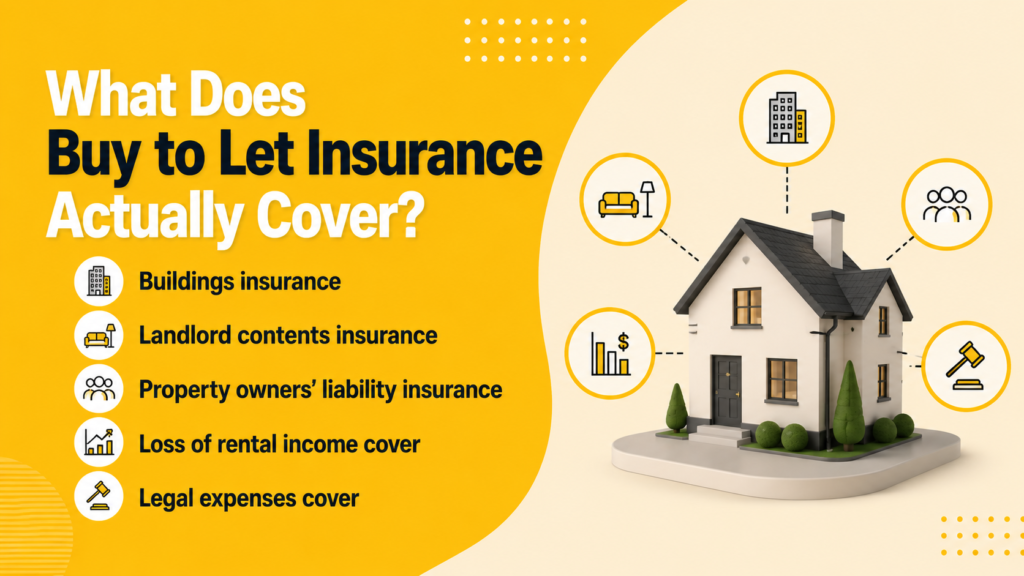
Policies vary between insurers, but most landlord cover is built around 5 core areas.
Buildings insurance covers the structure itself like walls, roof, floors, fitted kitchens and bathrooms, against risks like fire, flooding, storm damage, subsidence and burst pipes. This is usually the part your lender insists on.
Landlord contents insurance applies if you rent the property furnished. It covers items you’ve provided, sofas, beds, white goods, and carpets, but not anything belonging to the tenant. Tenants need their own contents policy for their own possessions.
Property owners’ liability insurance is arguably the part landlords underestimate most. If a tenant or visitor gets injured because of something at the property, a loose handrail, a broken step, this covers compensation claims, legal costs and court fees. Most policies set liability limits somewhere between £1 million and £10 million.
Loss of rental income cover kicks in when the property becomes uninhabitable after an insured event, like a fire, and tenants can’t stay. It replaces some of the rent you’d otherwise lose while repairs are underway.
Legal expenses cover helps with the cost of tenant disputes, eviction proceedings, or rent recovery, usually sold as an add-on rather than built in as standard.
Optional Add-Ons Worth Knowing About
- Rent guarantee insurance helps cover lost income if a tenant simply stops paying rent, separate from the property being uninhabitable.
- Accidental damage cover for damage that isn’t malicious, just an accident.
- Home emergency cover call-out support for boiler breakdowns, plumbing and electrical emergencies.
- Malicious damage cover for deliberate damage caused by a tenant, which standard buildings cover often excludes
How Much Does Buy to Let Insurance Cost in the UK?
This is where it gets property-specific, there’s no single number that applies to everyone. As a rough guide, based on typical UK landlord policies:
| Coverage Level | Typical Annual Cost (single property) |
| Buildings only | From around £150–£200 |
| Buildings + contents | Around £200–£350 |
| Buildings + contents + rent guarantee | Around £300–£500+ |
These are ballpark figures, and your actual premium will move up or down depending on the property itself. Insurance is one recurring cost to plan for, your mortgage rate is the other big one, and it’s worth comparing what’s out there before you commit. “Our Nationwide Mortgage Rates UK 2026: Complete Guide for Buyers, Movers & Remortgagers” is a good starting point if you haven’t locked in a rate yet.
A few things push the price up in particular:
- High-risk locations; flood-prone postcodes cost more to insure.
- Student lets; treated as higher risk by most insurers.
- HMOs; houses in multiple occupation usually need specialist cover, not a standard landlord policy.
- Claims history; a previous claim on the property or your record tends to push future premiums up.
4 Common Mistakes Landlords Make With Insurance
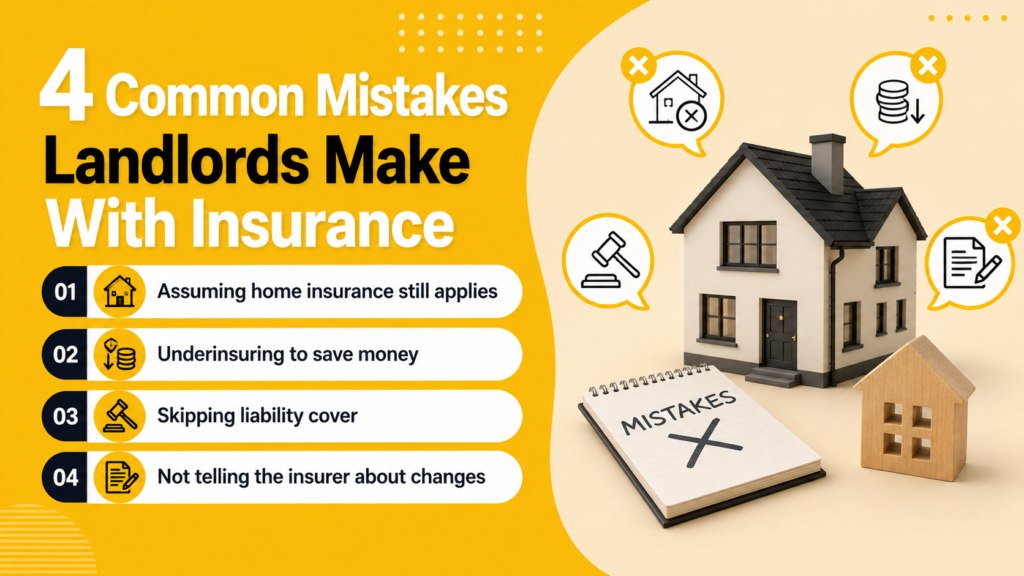
Assuming home insurance still applies. This is the single most common one. Renting the property invalidates most standard home policies, and plenty of landlords only find out when a claim gets rejected.
Underinsuring to save money. Picking the cheapest policy going often means important risks, liability, and loss of rent aren’t actually covered when you need them. This is usually where comparing properly pays off, see our breakdown of “Top Insurance Providers in the UK: What You Need to Know Before” You Buy for a clearer picture of what’s actually included before you go with the cheapest quote.
Skipping liability cover. A single injury claim from a tenant or visitor can run into thousands of pounds. It’s not the part to cut corners on.
Not telling the insurer about changes. New tenants, renovations, or a change in how the property is used should be reported. Insurers can reduce or refuse a payout if the policy no longer reflects the property accurately.
Frequently Asked Questions
What is a buy to let mortgage?
A buy to let mortgage is a loan specifically for purchasing a property you intend to rent out, rather than live in yourself. Lenders assess these differently to residential mortgages, the rental income the property can generate matters more than your personal salary, and deposits tend to start from around 20-25% of the property’s value.
How many buy to let mortgages can I have?
There’s no fixed legal limit, but it comes down to the lender. Some cap the number of mortgaged properties they’ll lend against for one landlord, while others are more flexible if you can show your portfolio is well-managed and each property is affordable on its own. A broker can point you toward lenders who work well with portfolio landlords specifically.
How much deposit do I need for a buy to let?
Most lenders ask for at least 20-25% of the property’s value, with 25% being the most common figure. Some will accept less, but usually at a higher interest rate. Larger deposits generally unlock better rates and more lender choice.
What are the new rules on buy to let?
UK landlords have had to adjust to several changes in recent years, tighter energy efficiency requirements for rental properties, tax relief restrictions on mortgage interest, and reforms affecting how tenancies can be ended. Rules continue to shift, so it’s worth checking current requirements before buying or renewing a let, rather than relying on what applied a few years ago.
Do I have to pay tax on buy to let property?
Yes. Rental income is taxable, and landlords also pay Capital Gains Tax when they sell a buy to let property at a profit. Mortgage interest relief has been restricted for individual landlords in recent years, which is part of why some investors now buy through a limited company structure instead. A tax adviser can confirm what applies to your specific situation.
Is a buy to let worth it?
It depends on the numbers for that specific property, rental yield, mortgage cost, insurance, maintenance, and tax all factor in. For some landlords it’s a solid long-term investment; for others, thin margins after costs make it less appealing. It’s worth running the actual figures for a property rather than going on general market sentiment either way.
What is a buy to let property?
A buy to let property is any property bought specifically to rent out to tenants rather than to live in yourself. It’s treated differently by lenders, insurers, and HMRC compared to a residential home, which is exactly why buy to let mortgages, landlord insurance, and rental income tax rules exist as their own separate categories.