
Table of Contents
ToggleLet’s be honest — buying a home is one of the biggest decisions you will ever make in your life. And before you start browsing properties on, one question sits at the top of your mind: how much mortgage can I actually afford?
If you have been searching for a clear, straight answer to this question, you are in the right place. A lot of people think it is just about how much you earn. But in reality, it is a bit more than that. Lenders look at your full financial picture — your income, your regular expenses, your debts, your credit history, and even your lifestyle spending. It can feel like a lot to take in, especially if you are a first-time buyer just trying to figure out where to start.
I have seen people get declined for mortgages simply because they did not understand how lenders assess affordability. I have also seen people get approved for far more than they expected — just because they got the right advice before applying. That is exactly why this guide exists. Whether you are buying your first home, moving to a bigger property, or thinking about remortgaging, this guide will walk you through everything you need to know.
How Much Mortgage Can I Afford Based on My Salary and Expenses?
This is the first question most people ask, and it is a fair one. Your salary plays a big role in what lenders are willing to offer you.
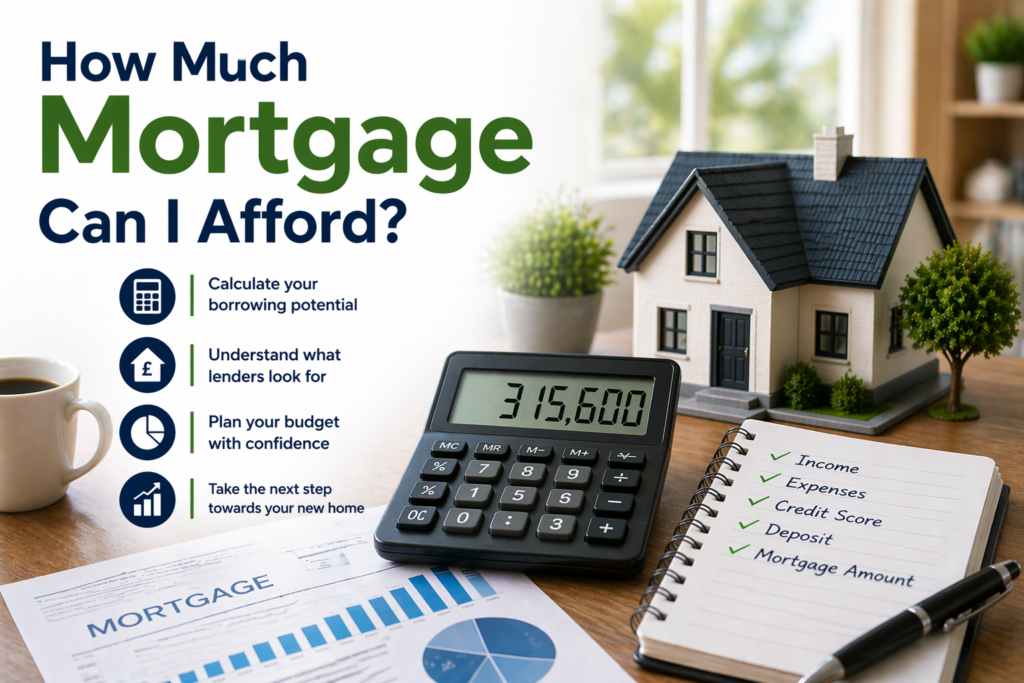
In 2026, the standard measure most UK lenders use is the 4.5x income multiplier. This means most lenders will allow you to borrow up to 4.5 times your gross annual income. So if you earn £40,000 a year, you could typically borrow up to £180,000. If you are buying jointly, both incomes are added together — so two people earning a combined £70,000 could borrow up to £315,000.
Your salary is not the only number that matters. Lenders want to know what you earn, but they also want to know what you spend. Here is what they look at when it comes to your expenses:
- Monthly bills — rent, utilities, phone, subscriptions
- Existing debt repayments — car finance, personal loans, credit card minimum payments
- Childcare or maintenance costs — if you have dependants
- Regular spending habits — how much you spend on food, travel, entertainment
Your deposit size, credit history, employment type, and existing debts all play a role in the final figure. While most mainstream UK lenders offer between 4 and 4.5 times your annual gross income, some will stretch to 5 or even 5.5 times for certain professions, higher earners, or those with larger deposits.
To give you a simple example: if you earn £35,000 per year but you have a car loan, a credit card balance, and a personal loan running at the same time, your borrowing power will be noticeably lower than someone earning the same salary with no debts at all. So before you apply, it is worth clearing as much debt as you can.
Quick Salary Affordability Guide:
| Annual Income (Sole) | 4x Income | 4.5x Income | 5x Income |
| £25,000 | £100,000 | £112,500 | £125,000 |
| £35,000 | £140,000 | £157,500 | £175,000 |
| £50,000 | £200,000 | £225,000 | £250,000 |
| £70,000 | £280,000 | £315,000 | £350,000 |
What Factors Determine Mortgage Lending Limits?
A lot of people assume the lender just looks at their payslip and makes a decision. That is not quite how it works. Lenders in the UK carry out what is called an affordability assessment, and it goes quite deep.
Factors that affect affordability include debt, age, dependants, employment status, and your credit score. Lenders also apply a stress test — they assess whether you would still be able to make your mortgage payments if interest rates were to rise. This helps make sure borrowers are not approved for mortgages they would struggle to repay later.
Here are the key factors that determine your lending limit:
- Your income type — Whether you are employed full-time, part-time, self-employed, or on a zero-hours contract matters. Full-time PAYE employees usually find the process more easy. Self-employed workers may have more limited mortgage choices because their income often varies.
- Your credit score — A clean credit history with no missed payments, defaults, or CCJs gives lenders confidence. A lower credit score does not automatically mean rejection, but it can reduce your options.
- Your existing debts — Car finance, personal loans, and credit card balances all reduce your borrowing capacity. Lenders calculate your debt-to-income ratio to understand how much of your monthly income is already committed.
- Your age — Lenders have maximum age limits at the end of a mortgage term. If you are older, some lenders may restrict the term length, which can increase monthly payments.
- Number of dependants — Children and other financial dependants increase your living costs in the eyes of the lender.
- Your deposit size — The bigger your deposit, the lower your loan-to-value (LTV) ratio, which usually means better rates and higher borrowing potential. For example, HSBC’s maximum income multiple is 4.49 if you have less than a 15% deposit, but for a 15% deposit or more, it lends up to 5.50x your income.
- Interest rate stress test — Lenders carry out affordability testing to check whether the borrower can afford a stressed mortgage rate at a higher level than the one they will actually pay.
Understanding all these factors before you apply can save you a lot of time and stress. If something in your financial profile is not ideal right now, a good mortgage adviser can help you plan and improve your position before you apply.
What Mortgage Calculators Can Help Me Determine Affordability in the UK?
Online mortgage calculators are a great starting point. They give you a quick estimate of how much you might be able to borrow based on your income and some basic details. While they are not a replacement for speaking to an adviser, they help you understand the ballpark figure before you go any further.
Why BM14 Finance Is the Better Choice?
Now, here is something worth knowing. Online calculators can tell you a number — but they cannot tell you which lender will accept your application, which product is right for your situation, or how to present your case to get the best outcome. That is where professional advice makes all the difference.
BM14 Finance is a UK-based mortgage adviser and insurance/protection service provider that genuinely takes the time to understand your situation. Whether you are a first-time buyer stepping onto the property ladder for the first time, someone looking to remortgage and get a better deal, a landlord exploring buy-to-let options, or a home mover planning your next step, BM14 Finance has expert advisers who know this market inside out.
On top of mortgage guidance, BM14 Finance also provides a full range of insurance services to protect you and your family, including:
- Traditional life insurance
- Income protection
- Critical illness cover
- Over 50s cover
- Whole of life insurance
- Buildings and contents insurance
Getting a mortgage is one thing. Protecting it is another. BM14 Finance helps you do both under one roof, so you do not have to go searching for separate providers. If you are serious about getting the right mortgage and the right protection — contact BM14 Finance today and talk to one of our expert advisers. Do not wait until you are already deep in the process. The earlier you get the right guidance, the better your outcome will be.
How Does My Income Affect Mortgage Affordability?
Your income is the foundation of your mortgage application. But it is not just about the amount — it is also about the type and stability of your income.
If you are employed (PAYE): Lenders love this. You have a regular, predictable salary with payslips to back it up. This is the most straightforward income type for mortgage purposes.
If you are self-employed: Self-employed applicants may need to provide two to three years of accounts submitted to HMRC. Lenders want to see that your income is consistent and sustainable, not just that you had a good year once.
If you have multiple income sources: Bonus payments, rental income, freelance income, or investments can sometimes be included — but lenders typically want to see a history of this income over at least two years before they count it.
If you are on a fixed-term contract: Some lenders will consider this, especially if you have a strong track record in your industry. Others may require you to have been on the same contract for a minimum period.
Here is something that many people do not realise: the biggest single affordability factor lenders assess is your documented monthly net income against committed outgoings, stressed for rate rises. This is sourced from payslips, tax returns, or accounts. Your credit score matters, but your income-to-outgoings ratio is what drives the decision.
To maximise your borrowing power based on income, you should:
- Avoid taking on new debt or finance agreements in the 6 months before applying.
- Keep your bank statements clean — avoid unexplained large withdrawals or gambling transactions.
- If you are self-employed, file your tax returns early and keep your accounts up to date.
- If you earn bonuses, make sure they are reflected in your payslips over at least two years.
Compare Mortgage Offers from Different Lenders
One of the biggest mistakes first-time buyers make is going straight to their bank and accepting whatever they are offered. Your bank may not have the best rate for your situation. In fact, they very often do not.
Careful comparison of fees, fixed periods, and long-term affordability is essential before committing to a mortgage. Here is what to compare when looking at different mortgage offers:
- Interest rate — the headline rate matters, but it is not the whole story.
- Arrangement fees — arrangement fees are common and may range from a few hundred pounds to over £1,000. A lower rate with a high fee may actually cost you more overall.
- Fixed vs variable — five-year fixed deals remain popular for certainty, while two-year fixed products may offer slightly lower headline rates but carry refinancing risk.
- Early repayment charges — check if there are penalties for paying off the mortgage early or overpaying.
- Loan-to-value (LTV) — the higher your deposit, the lower your LTV, and the better the rates you can access.
- Total cost over the term — always look at the total amount you will pay back, not just the monthly figure
A whole-of-market mortgage broker compares deals from dozens of lenders on your behalf. They also have access to exclusive rates that are not available directly to the public. This is exactly what BM14 Finance does — we search the market for you and present the options that genuinely suit your circumstances.
What are the Best Services for Mortgage Affordability Checks Near Me?
If you are based in the UK and looking for mortgage affordability help, you have a few options. You can go directly to a bank or building society, use a comparison website, or work with a professional mortgage broker.
Going directly to a lender is fine if your financial situation is very straightforward. But if you have any complexity — self-employment, previous credit issues, a small deposit, or multiple income sources — a broker is almost always the better route.
When you are looking for mortgage affordability services in the UK, here is what to look for:
- FCA regulated — always check that the adviser or firm is authorised and regulated by the Financial Conduct Authority.
- Whole-of-market access — brokers who can access deals from many lenders, not just a few panel lenders.
- Transparent fees — some brokers charge a fee, others are paid by commission from lenders. Make sure you understand how they are paid.
- Experience with your situation — if you are a first-time buyer, bm14 finance helps first-time buyers. If you are self-employed, bm14 finance is also here for you.
- Clear communication — a good adviser explains things clearly and does not rush you.
BM14 Finance ticks all of these boxes. Our team works with clients across the UK, whether you are buying for the first time, moving home, remortgaging, or investing in a buy-to-let property. We take the time to understand your full financial picture and find the right solution for you.
What Deposit Do I Need for a First-Time Buyer Mortgage?
The deposit is often the biggest barrier for first-time buyers. So let us break it down clearly.
Lenders generally offer a mortgage of up to 90% of the property value, meaning you will need at least a 10% deposit. Some lenders offer mortgages of up to 95% loan-to-value, requiring only a 5% deposit.
So if you are buying a home worth £200,000:
- A 5% deposit = £10,000
- A 10% deposit = £20,000
- A 15% deposit = £30,000
- A 25% deposit = £50,000
The higher your deposit, the more lenders and mortgage products you will have access to. A bigger deposit also means lower monthly repayments and access to better interest rates — because from the lender’s perspective, you are a lower risk.
Most UK lenders ask for a deposit of around 5% to 10% of the property price. Some now offer no-deposit mortgage options, though these usually come with additional requirements and stricter affordability checks.
If you are struggling to save, here are some options worth exploring:
- Lifetime ISA (LISA) — the government adds a 25% bonus on savings up to £4,000 per year, specifically for first-time buyers purchasing a property worth up to £450,000.
- Gifted deposit from family — this is very common in the UK. Lenders accept gifted deposits but will ask for a letter confirming it is a gift, not a loan.
- Shared Ownership — you buy a share of a property (usually between 25% and 75%) and pay rent on the rest, reducing the deposit needed.
- Help from employers — some companies offer salary advance or savings schemes that can help build a deposit faster
One real example worth sharing: a first-time buyer couple in Manchester earning a combined income of £65,000 saved a 10% deposit on a £220,000 property over three years using a Lifetime ISA. Their government bonus added over £5,000 to their savings pot — money they would not have had otherwise. They secured a mortgage at a competitive rate and bought their first home without needing to borrow from family. With the right plan and the right advice, it is very much possible.
Final Words
Buying a home in the UK in 2026 is absolutely achievable but it requires understanding. The more you know about how lenders think, what they look for, and how to present your application, the better your chances of getting the right mortgage at the right rate.
To summarise everything we have covered:
- Most UK lenders offer between 4 and 4.5 times your gross annual income.
- Your expenses, debts, and credit history all directly affect how much you can borrow.
- Online calculators are a useful starting point, but they do not replace professional advice.
- Getting a Decision in Principle before house-hunting puts you in a stronger position.
- A bigger deposit gives you access to better rates and more lender choices.
- Comparing multiple lenders — rather than going straight to your bank — can save you thousands over the life of your mortgage
If you are ready to take the next step, BM14 Finance is here to help. Our expert mortgage advisers guide first-time buyers, home movers, remortgage customers, and buy-to-let investors through every step of the process. And with a full range of insurance services — from life insurance and income protection to critical illness cover and buildings insurance — we make sure you and your home are fully protected once you have the keys.
Do not leave your mortgage to chance. Contact BM14 Finance today, speak to an expert, and get the guidance you deserve.
Note:
Your home may be repossessed if you do not keep up repayments on your mortgage. BM14 Finance is authorised and regulated by the Financial Conduct Authority. Always seek professional advice before making financial decisions.